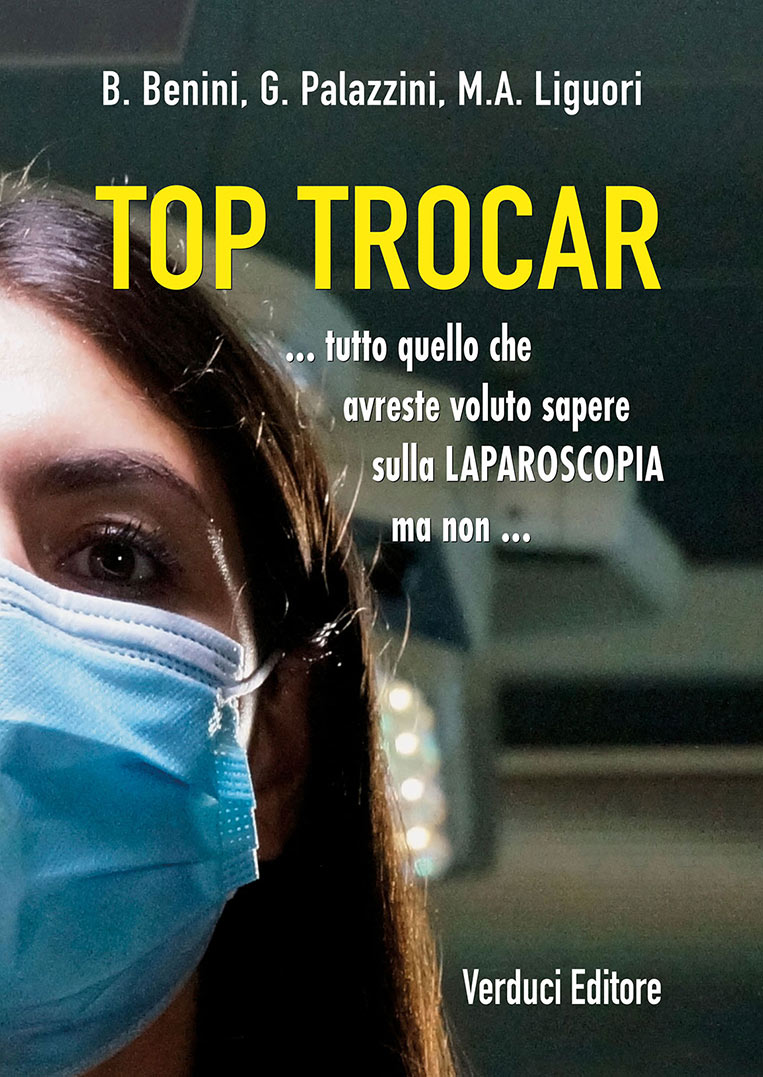
Top Trocar
… tutto quello che avreste voluto sapere sulla laparoscopia ma non…
Surgery is a medical specialty which, etymologically, is defined as the practice of healing through the use of the hands. It therefore involves physically acting on tissues through incisions and sutures.
Surgery, as defined above, has existed since ancient times, as the earliest traces of surgical procedures date back to prehistoric eras, when our ancestors already performed trephinations and incisions.
Throughout the centuries and across history, humankind has always placed mind and creativity at the service of innovation. Medicine and surgery benefited greatly from this.
To move from barbers to recognised physicians, the first surgeons had to wait for the French Revolution. The reunification of medical and surgical professions granted surgeons the right to access official university teaching and research. This made it possible to improve anatomical and physiological knowledge, as well as the rules of asepsis.
Thus, modern surgery was born.
In 1944, a French gynaecologist, Professor Raoul Palmer, had the brilliant idea of introducing an illuminated scope into the peritoneal cavity of a patient for diagnostic purposes. From a spark of creativity, the master concept of laparoscopy timidly appeared—an innovation that would forever change abdominal and digestive surgery, and many other specialties.
In 1972, Doctors Bruat and Manhes performed the first conservative treatment of an ectopic pregnancy at the Hôtel-Dieu in Clermont-Ferrand.
In 1987, Professor Philippe Mouret carried out the first laparoscopic cholecystectomy at the Clinique de la Sauvegarde in Lyon.
Imagine the upheaval of an entire community, eager to learn and develop the surgery of tomorrow.
Laparoscopy means offering patients a less aggressive treatment, promising fewer infections, fewer parietal complications and less postoperative pain. This ensures a shorter and more comfortable postoperative recovery, and a faster return to normal life.
The saying “big incision, big surgeon” is no longer Gospel.
From its beginnings to the present day, laparoscopy has become the preferred approach for trained surgeons in many indications. The (non-exhaustive) list continues to grow over the years, thanks to experience, the ideas of the most ingenious surgeons, and the sharing of this knowledge in the service of others.
We can treat everyday conditions as well as surgical emergencies, abdominal wall hernias, remove the gallbladder, treat cancer even at advanced stages, and address obesity. Laparoscopy also becomes a valuable diagnostic tool in certain indications. Not to mention our many colleagues in other specialties who now also treat thoracic, joint and urological diseases through video-assisted surgery.
Today, expert centres in laparoscopic surgery exist worldwide. Thousands of surgeons of all ages, genders and backgrounds work every day to learn the fundamentals and refine their technical skills. Students look up to these experienced Masters, who will pass on their knowledge, changing the lives of thousands of patients.
Through determination and experience, tomorrow’s surgeons will continue to refine procedures and techniques, making surgery ever less aggressive and ever more respectful of patients’ physiology.
Through this book, you will be presented with a broad overview of what laparoscopy is today.
It is up to you to use it.
G. Cadiere
Original price was: €65,00.€61,50Current price is: €61,50.
Additional information
| edizione | 1 edizione – Febbraio 2023 |
|---|---|
| formato | 17 x 24 cm |
| pagine | 470 pagine |
| informazioni extra | interamente stampato a colori – 500 illustrazioni e numerose tabelle |
| Autori | B. Benini – G. Palazzini – M.A. Liguori |
Description
Table of Contents
Section I – The perfect storm
- Laparoscopic surgery in trauma – “Dead Poets Society”
- Bowel obstruction and adhesive disease – “In the spider’s web”
- Peritonitis – “Fifty shades of pus!”
- A. Laparoscopy in acute appendicitis
- B. Laparoscopy in visceral perforations
- C. Laparoscopy in acute pelvic abdomen and utero-adnexal disorders
- Complications: prevent, recognise and manage – “When the going gets tough”
- Haemostasis in laparoscopic surgery – “Deep red”
- Clinical risk – “Cu mancia fa muddichi (who eats makes crumbs)”
Section II – Instructions for use
- Gallbladder and biliary tract
- A. Standard cholecystectomy
- B. The difficult gallbladder
- C. Common bile duct stones
- Hernias – “Another hole in the wall”
- A. Laparoscopic inguino-crural hernia repair
- A1. TAPP – Transabdominal Preperitoneal Hernia Repair
- A2. TEP – Totally Extraperitoneal Hernia Repair
- B. Incisional hernia (laparocele)
- C. Diaphragmatic hernias
- A. Laparoscopic inguino-crural hernia repair
- Oesophago-gastric junction – “The cormorant syndrome and other diseases”
- A. Anti-reflux procedures for GERD
- B. Hiatal hernia
- C. Extramucosal oesophageal cardiomyotomy (Heller procedure)
- Gastric resections – “Another symphony for Theodore”
- Laparoscopic colorectal resections – “The warrior’s way”
- A. Right hemicolectomy
- B. Left hemicolectomy
- C. Sigmoidectomy and Hartmann’s procedure
- D. Rectal resection
- Bariatric surgery – “The Pickwick circle”
- Laparoscopic splenectomy – “Curing melancholy and other ills…”
- A. Total splenectomy
- B. Partial splenectomy
- Laparoscopic kidney surgery – “Homo sapiens non urinat in ventum”
- Adrenalectomy – “So far away, so small”
- Laparoscopic pancreatic surgery – “The cherry on the cake”
- Laparoscopic liver resections – “Prometheus’ torment”
Section III – Ready, set, go…
- Operating room and patient set-up – “In the beginning there was chaos…”
- Instruments for laparoscopic surgery – “We wanted to amaze with special effects”
- Ergonomics and occupational disorders – “It’s a dirty job, but someone has to do it”
- A. Ergonomics in laparoscopic surgery
- B. Occupational disorders related to laparoscopic surgery
- Physiopathological bases of pneumoperitoneum and anaesthesia in laparoscopy – “Conscious anaesthesia”
- Perioperative management – “The little chef’s handbook”
- Exploratory laparoscopy – “A look into the dark”
- Abdominal access and induction of pneumoperitoneum – “Well begun is half done…”
- Tissue approximation in laparoscopy – “Zen and the art of suturing”
Section IV – It’s a dirty job but someone…
- Bedside laparoscopy – “Room service”
- Laparoscopy in pregnancy – “What to expect when you’re expecting”
- Single-incision laparoscopic surgery – “Complicating simple things all by yourself”
- Hand Assisted Laparoscopic Surgery (HALS) – “A slip of the hand!”
- Laparoscopic surgery in the obese patient – “My big fat operation…”
- Laparoscopy in paediatric patients – “Trick or treat?”
- Laparoscopy and ventriculo-peritoneal shunt – “Handle with care”
Related products
-
 Anna Maria Naddei
La testa sulle SPALLE IL BEN ESSERE del corpo
Original price was: €20,00.€19,00Current price is: €19,00. Buy now -
 Maurizio Pagano
Chirurgia delle Varici
Original price was: €39,00.€37,00Current price is: €37,00. Buy now -
Giannicola G. - Salustri M.
Il Gomito – Aspetti Clinici e Riabilitazione
Original price was: €43,00.€40,85Current price is: €40,85. Buy now