

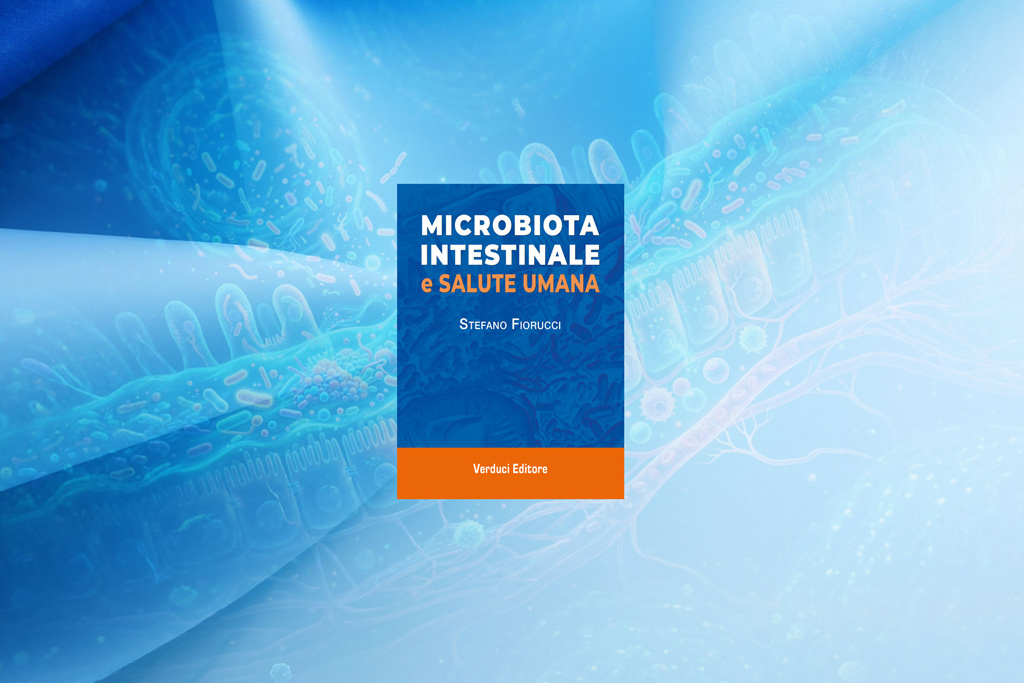
Over the past twenty years, the gut microbiota has established itself as one of the undisputed protagonists of our health, a true “meta-organism” essential for the homeostasis of the human body. Given the vastness and complexity of studies in this field, navigating the available evidence can be a challenge.
To meet this need, the volume “Il microbiota e la salute umana” (The Microbiota and Human Health – size 17 x 24, 247 pages, enriched with numerous full-color tables) was created to provide a critical, systematic, and updated synthesis on the subject.
Beyond the concept of “bacterial flora”
From the first observations in the 17th century to the advent of modern metagenomic sequencing techniques (such as the Human Microbiome Project), our understanding of microorganisms has radically changed. Today we know that bacteria, archaea, viruses, and fungi form an ecosystem that communicates bidirectionally with the host. Through a complex network of signals (short-chain fatty acids, tryptophan derivatives, etc.), the microbiota regulates the maturation of the immune system, energy metabolism, and the gut-liver and gut-brain axes.
Dysbiosis, multi-omics, and new therapeutic frontiers
The text explores in depth how the alteration of this delicate qualitative and functional balance – dysbiosis – is associated with numerous chronic diseases, including:
- Metabolic liver diseases (MASLD) and cardiovascular diseases
- Obesity and diabetes mellitus
- Inflammatory bowel diseases and autoimmune pathologies
- Neoplasms
Thanks to the integration of modern multi-omics technologies (particularly metabolomics), the volume helps distinguish between correlation and causality, highlighting how the identification of specific metabolic signatures paves the way for new diagnostic and predictive biomarkers.
What will you find in the volume?
Specifically aimed at nutrition professionals, clinicians, and biomedical researchers, the manual pays particular attention to the translational dimension of research. For each pathological condition investigated, the text analyzes:
- The molecular and immunological mechanisms associated with eubiosis and dysbiosis.
- Nutritional and pharmacological approaches for modulating the microbiota.
- Therapeutic perspectives based on the microbiome and personalized medicine.
A special focus is reserved for the mechanisms of action of diet, prebiotics, probiotics, postbiotics, fecal microbiota transplantation, and microbiome-based approaches, analyzed in light of the latest clinical and experimental evidence.
A fundamental work to understand and exploit the microbiota as a central biological determinant and an emerging therapeutic target.