

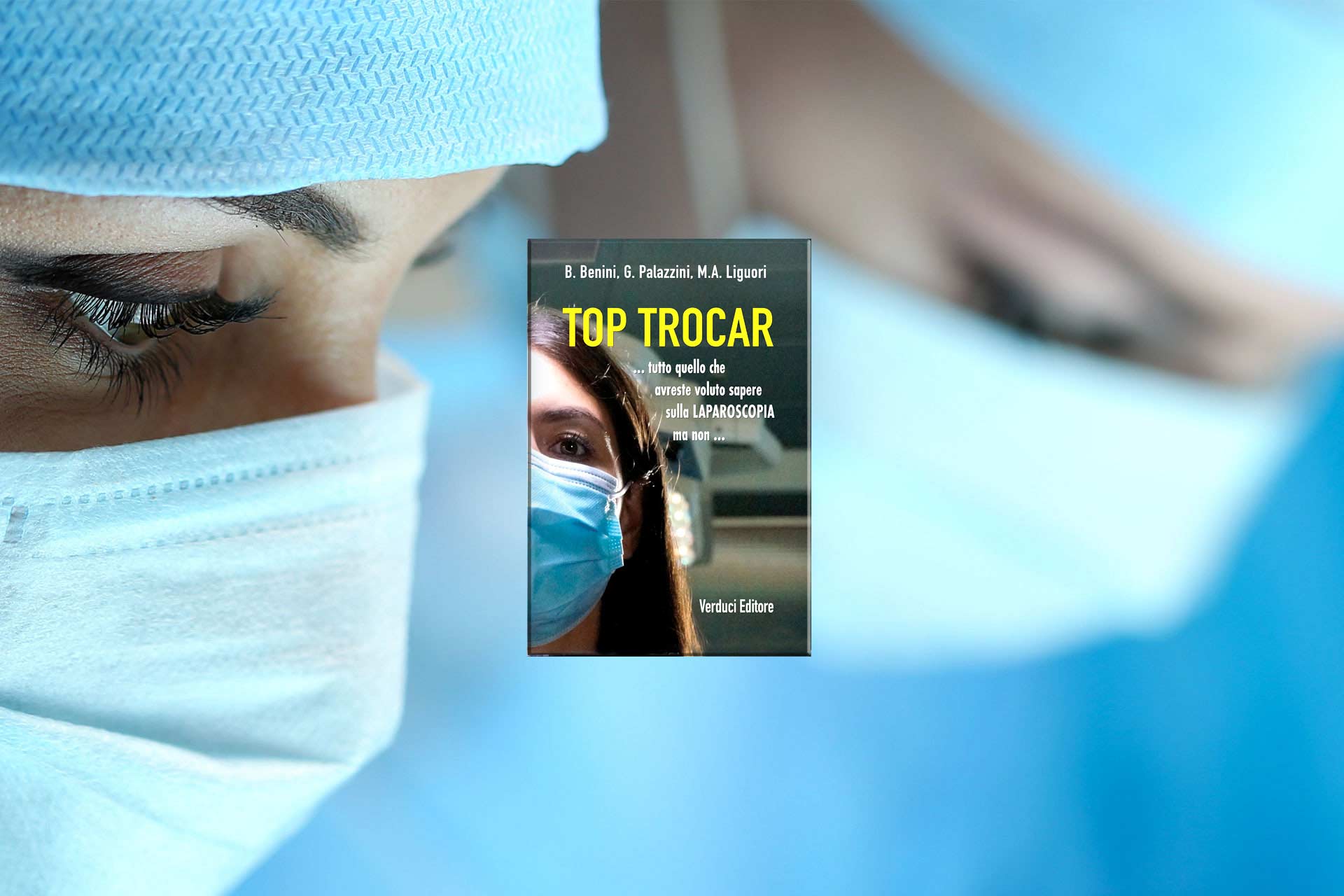
Top Trocar … tutto quello che avreste voluto sapere sulla laparoscopia ma non…
Surgery is a medical specialty defined as the art of healing through the use of hands, involving direct intervention on tissues through incisions and sutures.
Its origins date back to prehistoric times, when early humans were already performing primitive surgical procedures. Over the centuries, human ingenuity and scientific progress have shaped modern surgery.
The true turning point came with the French Revolution, when surgeons gained access to formal university education and research, leading to advancements in anatomy, physiology and asepsis. Modern surgery was born.
In 1944, Professor Raoul Palmer introduced an illuminated optic into the peritoneal cavity for diagnostic purposes — the conceptual spark of laparoscopy, which would transform abdominal and digestive surgery.
The first conservative treatment of ectopic pregnancy via laparoscopy was performed in 1972 by Drs. Bruat and Manhes. In 1987, Professor Philippe Mouret carried out the first laparoscopic cholecystectomy, marking a revolution in surgical practice.
Laparoscopy offers less invasive procedures, fewer infections and wound complications, reduced postoperative pain and faster recovery.
Today it is the preferred approach for numerous indications and a valuable diagnostic tool. High-level centers worldwide train surgeons of all backgrounds to master and refine laparoscopic technique.
This volume presents a comprehensive overview of modern laparoscopy — its history, evolution and future. It is up to you to use it.
G. Cadiere