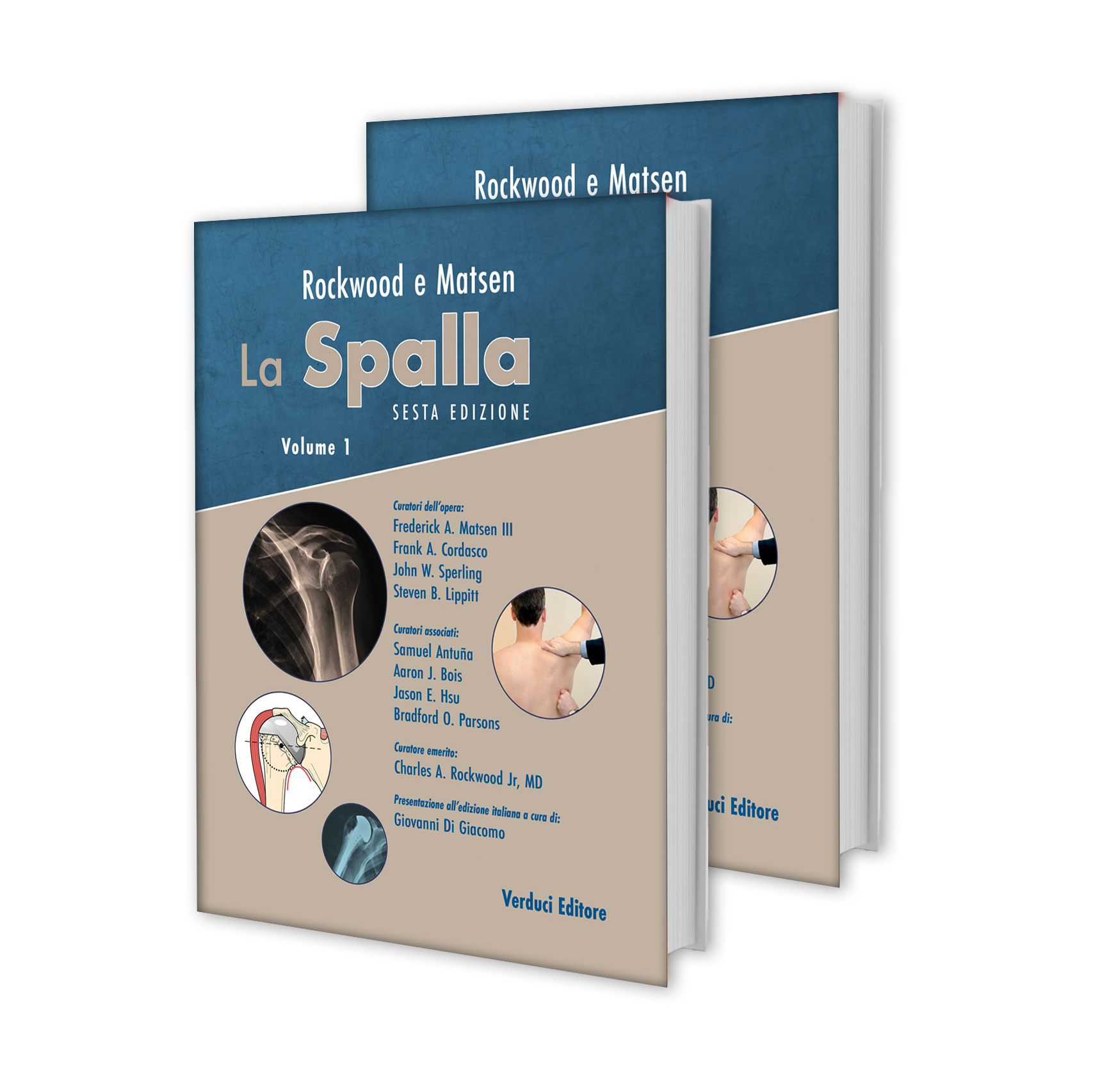
La Spalla – 6th Edition
Two-volume work, size 22 x 28 cm, over 1400 pages, online contributions, more than 1600 colour images, numerous tables, printed entirely in full colour.
“La Spalla” by Rockwood and Matsen is a must-have reference for specialists devoted to shoulder surgery. Together with the five previous editions, it reflects the continuous evolution of knowledge in this field.
Having “La Spalla” in one’s professional library provides both theoretical and practical updating, offering the specialist guidance, reassurance and clinical insight.
The authors have involved internationally recognised subspecialists who focus on highly specific pathologies, representing the most advanced scientific update. Each chapter synthesises years of research, scientific publications, clinical outcome evaluation and technological development.
The greatest strength of this scientific work lies in its ability to translate complex and passionate international research—presented in journals and scientific meetings worldwide—into comprehensive and authoritative chapters.
Readers are offered streamlined and elegant access to the most current knowledge available on shoulder pathology.
“La Spalla” maintains a strong emphasis on functional anatomy and biomechanics, which introduce the more specific chapters devoted to everyday clinical challenges: athlete’s shoulder, fractures, rotator cuff pathology, instability, arthritis, complications and more.
This monumental work will undoubtedly support future research developments and inspire younger specialists to continue advancing the field—just as Rockwood and Matsen have exemplified.
Dr Giovanni Di Giacomo
Orthopaedic Surgery
Concordia Hospital, Rome, Italy
Price range: €137,50 through €275,00
Additional information
| edizione | 6 edizione |
|---|---|
| autori | Rockwood e Matsen |
| formato | 22 x 28 |
| Volumi | Entire Work, Volume 1, Volume 2 |
| informazioni extra | più di 1500 immagini e contributi on-line |
| pagine | 1400 pagine |
Description
VOLUME 1
Part I – Introduction
- Editorial – What Should Our Educational Legacy Be?
Part II – Anatomy and Evaluation
- Evolutionary Anatomy of the Shoulder
- Gross Anatomy of the Shoulder
- Clinical Evaluation of Shoulder Problems
- Radiographic Evaluation of Shoulder Problems
Part III – Shoulder Conditions in Children
- Shoulder Conditions in Children
Part IV – Shoulder Problems in Athletes
- Throwing Athletes
- Non-Throwing Athletes
- Arthroscopic Surgery for Biceps-Labral Complex Disorders
- Tendon Ruptures in Athletes: Pectoralis Major, Latissimus Dorsi and Teres Major
Part V – Shoulder Arthroscopy
- Editorial – Development of Shoulder Arthroscopy: Achieving a Paradigm Shift in Orthopaedic Surgery
Part VI – Shoulder Tumors
- Tumors and Related Pathologies
Part VII – Fractures of the Scapula, Clavicle and Humerus
Section A – Fractures
- Scapular Fractures
- Clavicle Fractures
- Proximal Humerus Fractures
Section B – Expert Commentary
- Editorial – Proximal Humerus Fractures
Part VIII – Shoulder Stiffness
- General Principles of Shoulder Stiffness
- Primary Idiopathic Shoulder Stiffness: Frozen Shoulder
- Acquired Shoulder Stiffness
Part IX – Acromioclavicular and Sternoclavicular Arthropathies
Section A – Acromioclavicular Joint Disorders
- Relevant Anatomy, Biomechanics and Classification of Acromioclavicular Joint Disorders
- Epidemiology, Evaluation and Nonoperative Treatment of Acromioclavicular Arthropathies
- Open Treatment of Atraumatic and Traumatic Acromioclavicular Joint Disorders: Indications, Techniques and Outcomes
- Arthroscopic and Arthroscopically Assisted Treatment of Atraumatic and Traumatic Acromioclavicular Joint Disorders: Indications, Techniques and Outcomes
- Complications Associated with Surgical and Conservative Treatment
Section B – Sternoclavicular Joint Disorders
- Relevant Anatomy, Biomechanics and Classification of Sternoclavicular Joint Disorders
- Epidemiology, Evaluation and Nonoperative Treatment of Sternoclavicular Arthropathies
- Open Treatment of Atraumatic Sternoclavicular Joint Disorders: Indications, Techniques and Outcomes
- Arthroscopic and Arthroscopically Assisted Treatment of Atraumatic Sternoclavicular Joint Disorders: Indications, Techniques and Outcomes
- Open Treatment of Traumatic Sternoclavicular Joint Disorders: Indications, Techniques and Outcomes
VOLUME 2
Part X – Glenohumeral Instability
Section A – Anterior Instability
- Anterior Instability: Epidemiology, History, Physical Examination, Imaging and Conservative Treatment
- Anterior Instability: Arthroscopic Surgery and Outcomes
- Anterior Instability – Open Surgery: Primary and Revision Procedures with Outcomes
- Anterior Instability – Bone Grafting Procedures: Outcomes of Primary and Revision Surgeries
Section B – Posterior Instability
- Posterior Instability: Epidemiology, History, Physical Examination, Imaging and Conservative Treatment
- Posterior Instability: Surgical Technique and Outcomes
- Posterior Instability: Open Surgery and Bone Augmentation Procedures
Section C – Multidirectional Instability
- Multidirectional Instability: Epidemiology, History, Physical Examination, Imaging and Conservative Treatment
- Multidirectional Instability: Arthroscopic Treatment and Outcomes
- Multidirectional Instability: Open Inferior Capsular Shift
- Multidirectional Instability: Rehabilitation and Return to Sport
Section D – Expert Commentary
- Editorial – Concavity Compression
- Editorial – Glenohumeral Instability in the Young Patient
- Editorial – My Approach to First-Time Shoulder Dislocation
- Editorial – Use and Abuse of the Latarjet Procedure
- Editorial – Soft Tissue Bankart Repair: Still the “Gold Standard”
Part XI – Sepsis
- Introduction to Sepsis
- Molecular Mechanisms and Pathogenesis of Shoulder Sepsis
- Treatment of Shoulder Infections
Part XII – Shoulder Ultrasound
- 13-Point Shoulder Ultrasound Examination
Part XIII – Rotator Cuff Tears
Section A – Rotator Cuff
- Structure and Function of the Rotator Cuff
- Epidemiology and Natural History of Rotator Cuff Disease
- Evaluation of Rotator Cuff Disease: History, Physical Examination and Imaging
- Nonoperative Treatment of Rotator Cuff Disease
- Rotator Cuff Repair: Tear Classification, Surgical Techniques and Outcomes
- Rehabilitation After Rotator Cuff Repair
- Treatment of Irreparable Rotator Cuff Tears and Failed Repairs
Section B – Expert Commentary
- Editorial – Lessons Learned from Treating Patients with Previous Rotator Cuff Repairs
Part XIV – Nerve Disorders in the Shoulder Region
Section A – Nerve Disorders
- Nerve Disorders Related to the Shoulder
Section B – Expert Commentary
- Editorial – Shoulder Reconstruction in Adult Patients with Brachial Plexus Injury
Part XV – Glenohumeral Arthritis
Section A – Arthritis
- Evaluation and Treatment of Glenohumeral Arthritis
- Role of Arthroscopy in the Evaluation and Treatment of Glenohumeral Arthritis
Section B – Expert Commentary
- Editorial – Ideal Indications and Surgical Technique for Anatomic Total Shoulder Arthroplasty in Primary Osteoarthritis
- Editorial – Glenoid Reconstruction in Shoulder Arthroplasty
- Editorial – Bone Grafting in Shoulder Arthroplasty: What Is Its Role?
- Editorial – Trials and Tribulations in Bringing Reverse Shoulder Arthroplasty to the United States
- Editorial – Revision Shoulder Arthroplasty: Techniques to Facilitate Reconstruction
Part XVI – Occupational Shoulder Disorders
- Occupational Shoulder Disorders
Part XVII – Assessment of Treatment Effectiveness
- Assessment of Treatment Effectiveness
Part XVIII – Concluding Comments
- Editorial – A Framework of Innovation in Shoulder Surgery
- Editorial – Treating Patients with Shoulder Problems: Technique versus Technology
Related products
-
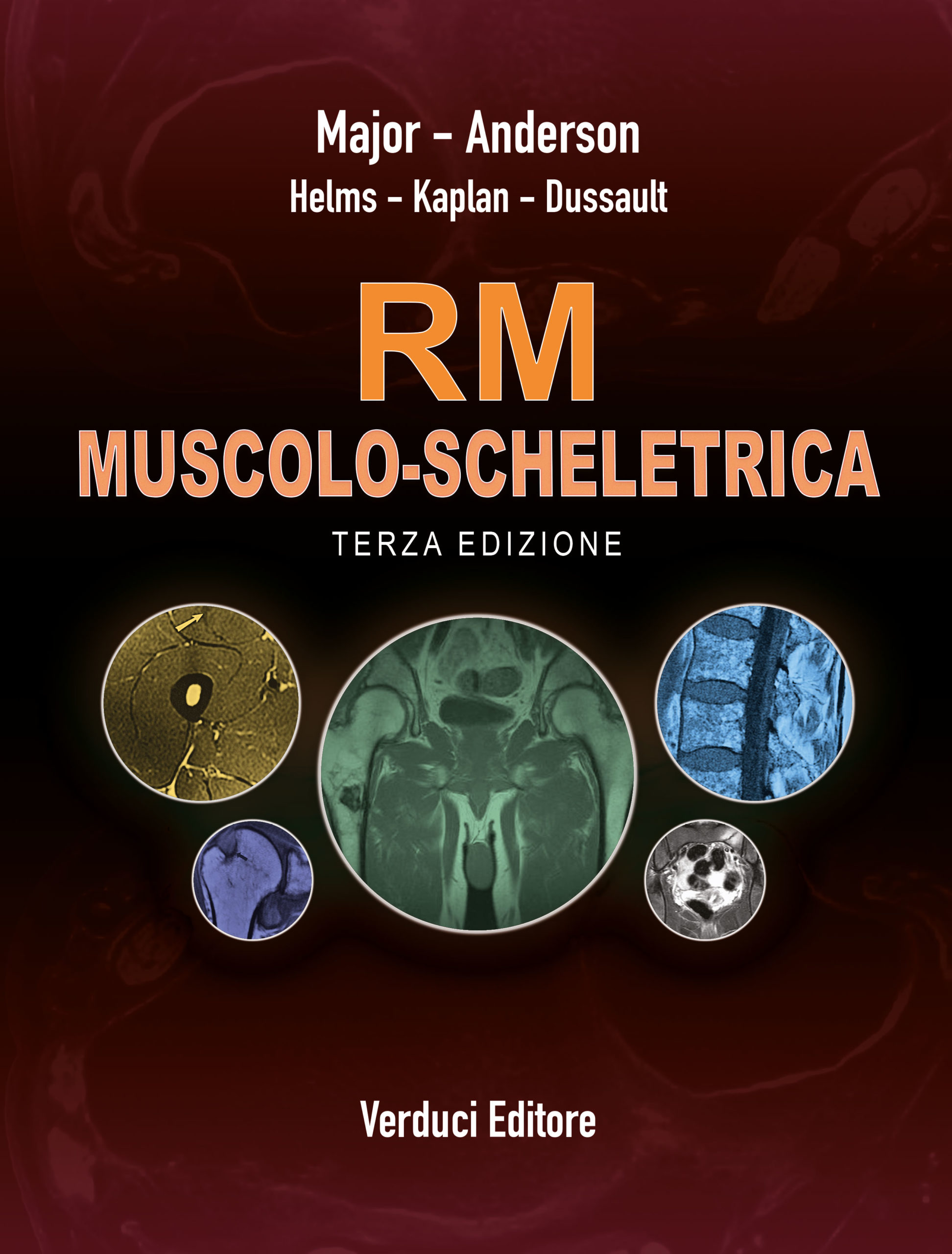
 Major - Anderson - Helms - Kaplan - Dussault
RM Muscolo-Scheletrica
Original price was: €150,00.€142,50Current price is: €142,50. Buy now -
 Favilli A. - Gerli S. - Mazzon I.
La Miomectomia Resettoscopica con Tecnica ad Ansa Fredda
Original price was: €14,00.€13,30Current price is: €13,30. Buy now -
 Alexander N. Sencha, Yury N. Patrunov
Ecografia Tiroidea
Original price was: €68,00.€64,50Current price is: €64,50. Buy now