

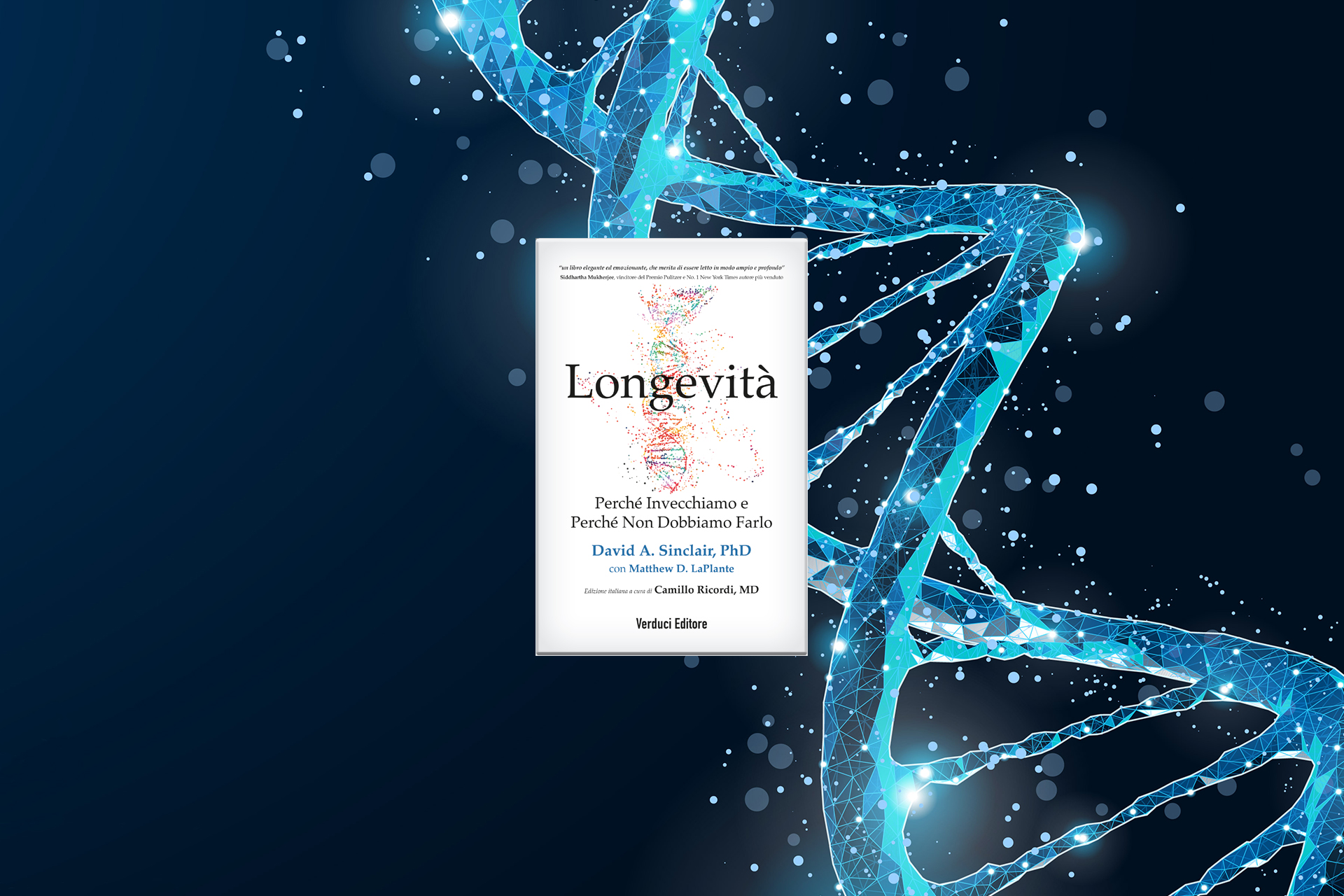
Longevità (Lifespan – Italian edition)
Presentation of the Italian Edition
Longevità is the Italian edition of Lifespan, the groundbreaking book by David Sinclair, a leading international figure in ageing and longevity research.
This work immediately caught my attention from the very first chapter, where Sinclair cites Thomas Kuhn’s book The Structure of Scientific Revolutions, which had fascinated me so much that it became the topic of my presidential address at the international congress of the Cell Transplant Society. Kuhn explains how scientific progress inevitably leads to new questions that researchers initially try to answer within the boundaries of the current paradigm, while the “old guard” rarely embraces truly revolutionary hypotheses that challenge established dogma.
Over time, crises grow until a paradigm shift occurs, not because the old guard is persuaded by new evidence, but because it is gradually replaced by a new generation of scientists.
In Sinclair’s view, ageing is a disease: we age, but we may not have to. This idea, very close to my own vision, suggests that old age, traditionally considered an irreversible terminal condition, could instead become a chronic condition with a much slower course.
Sinclair takes us on a journey from key historical milestones in ageing and longevity research to the most recent discoveries, pushing the boundaries of science and challenging the dogma of the inevitability of ageing. His work on experimental models that double lifespan, “immortal” jellyfish, bicentennial whales and the “information theory of ageing” shows how ageing can be seen as a loss of “youthful information”, driven by epigenetic noise.
Genetic background may account for only about 15% of lifespan, while the remaining 85% is attributed to epigenetic factors. Resetting the epigenome and slowing or even reversing the ageing clock by decades may be possible through a growing arsenal of molecules, from polyphenols and sirtuin activators to senolytics.
Extending healthy lifespan (healthspan) is becoming an ethical imperative for modern societies, supported by advances in genomics and biomarker platforms such as InsideTracker, which enable personalised strategies based on individual biological age and risk profiles.
Against a background of declining life expectancy, chronic degenerative diseases and the impact of unhealthy Western diets, Sinclair’s message is clear: investing in prevention and in the biology of ageing is as crucial as tackling climate change and environmental sustainability if we want a better future for the next generations.
Enjoy your reading!
Camillo Ricordi