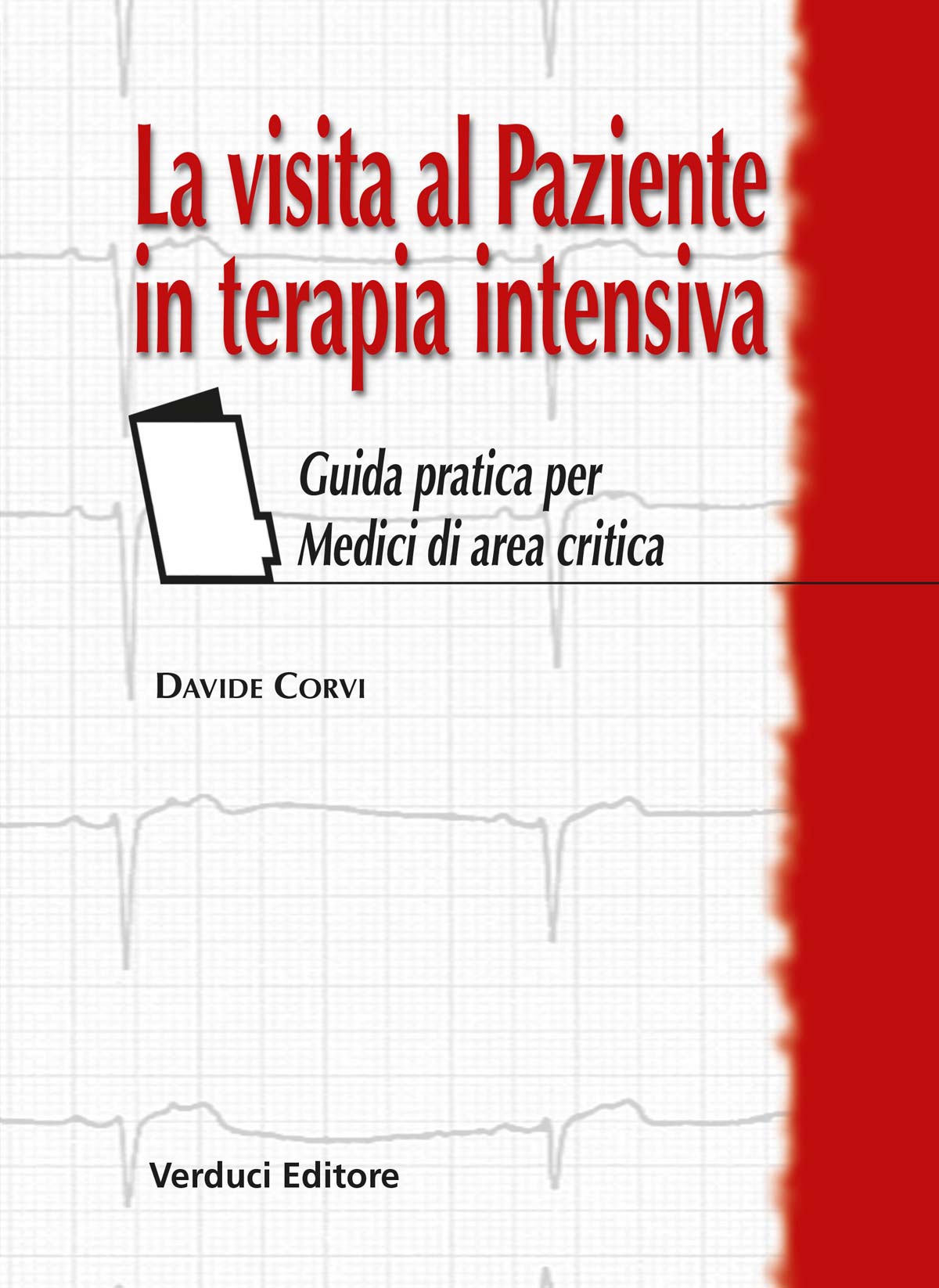
La Visita al Paziente in Terapia Intensiva
Pocket-sized volume (15 × 21 cm), 48 pages.
This concise guide is intended to provide Anesthesiology, Critical Care and Emergency Medicine physicians with a practical mnemonic method to assess the adult critically ill patient, to train rapid diagnostic reasoning and to avoid overlooking essential therapeutic decisions in the complexity of intensive care practice.
The following chapters present a structured and methodical process to systematically analyze, according to priority order, the essential components of the diagnostic evaluation.
Each chapter introduces a different approach to the patient. These approaches are designed to be applied sequentially: the first approach described, the emergency approach, is also the first to be performed in real time. The concept of priority must therefore guide both clinical reasoning and procedural order.
The book focuses on initial diagnosis rather than therapy; therefore, therapeutic aspects are intentionally limited or only briefly mentioned.
Although many of the concepts may appear obvious to experienced intensivists, they represent a valuable starting framework for residents facing critically ill patients for the first time, offering a mental structure that is often absent in more extensive intensive care textbooks.
The author hopes this guide will prove helpful for young physicians approaching one of the most complex, challenging and fascinating fields of medicine.
Original price was: €10,00.€9,50Current price is: €9,50.
Additional information
| edizione | Gennaio 2012 |
|---|---|
| autori | Corvi D. |
| formato | Volume formato 15 x 21 |
| pagine | 48 pagine |
Description
Emergency approach
- A – Airway
- B – Breathing
- C – Circulation
- C – Surgery
- N – Neurology
Analytical approach
- History
- Neuromuscular system
- Respiration
- Circulation
- Diuresis
- Abdomen
- Infections
- Wounds
- Investigations
- Therapy
Synthetic approach and anatomical approach
Mnemonics and conclusion
Related products
-
 Pippa P. - Busoni P.
Anestesia Locoregionale
Original price was: €120,00.€60,00Current price is: €60,00. Buy now -
 Marcucci C. - Cohen N.A. - Metro D.G. - Kirsch J.R.
Come Evitare Errori in Anestesia
Original price was: €75,00.€71,25Current price is: €71,25. Buy now -
Pippa P. - Busoni P.
Anestesia Locoregionale – Tecniche Ecoguidate
Original price was: €12,00.€11,40Current price is: €11,40. Buy now